
 Historical Place
Salimgarh Fort
Sur-era river fort beside the Red Fort, later a Mughal and British prison
Central Delhi
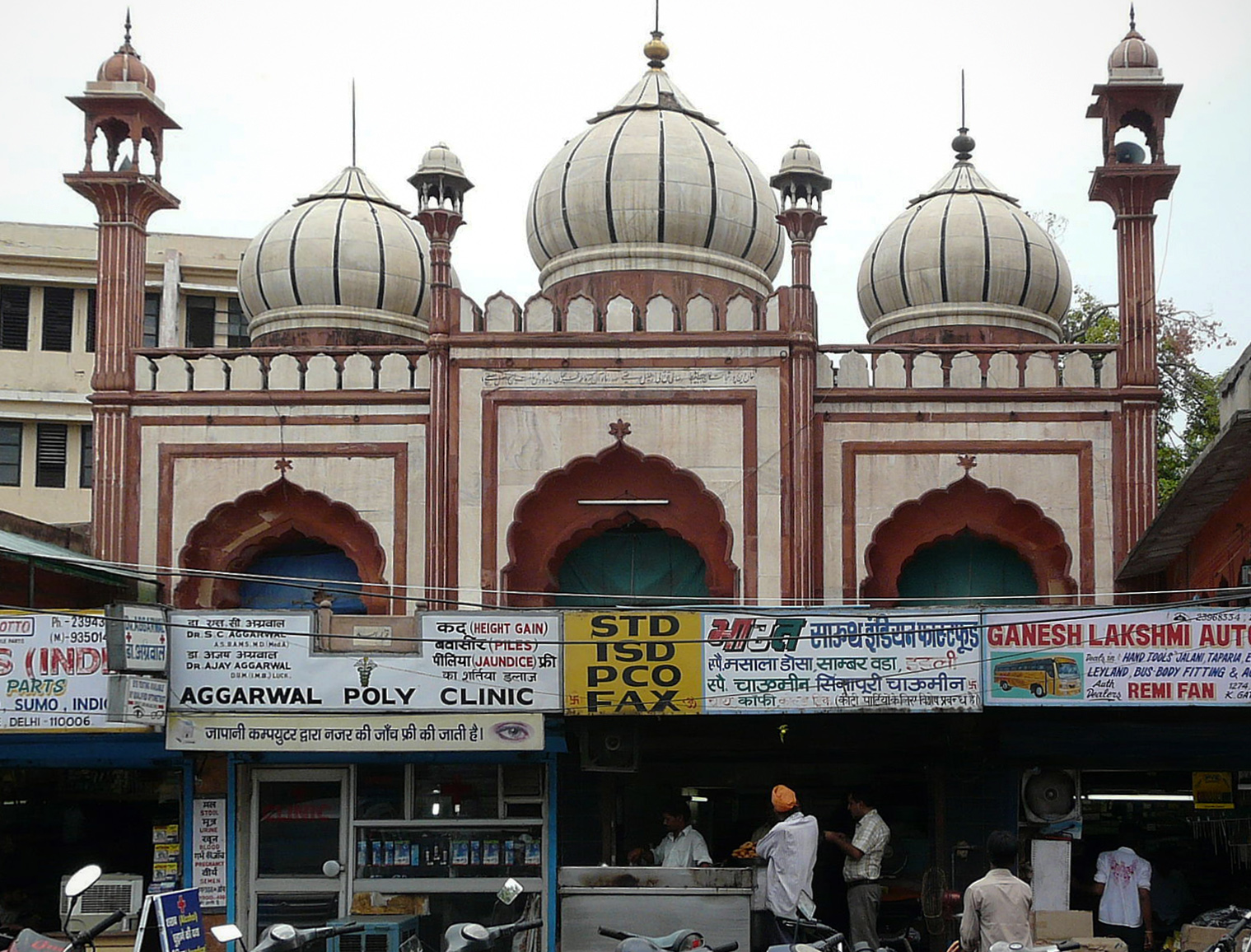
Photo: varunshiv (Varun Shiv Kapur) · CC BY 2.0 · Wikimedia Commons
Sign in to save places and plan trips, day by day.
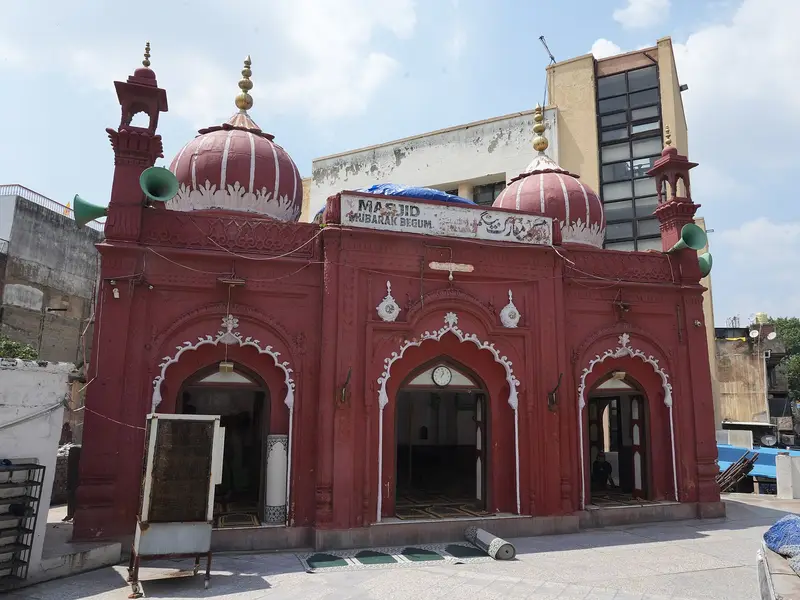
Lal Masjid, the Red Mosque, is also known as Fakr-ul Masjid and Sikandar Sahib's Masjid. It stands in Bara Bazaar near Kashmiri Gate in Old Delhi. Kaniz-i-Fatima, titled Fakr-i-Jahan, built it in 1728 to commemorate her husband, Shujaat Khan, who was a noble at Aurangzeb's court. Colonel James Skinner later repaired it, which is why it is sometimes wrongly credited to him. It was damaged in the 1857 siege of Delhi and has been restored since.
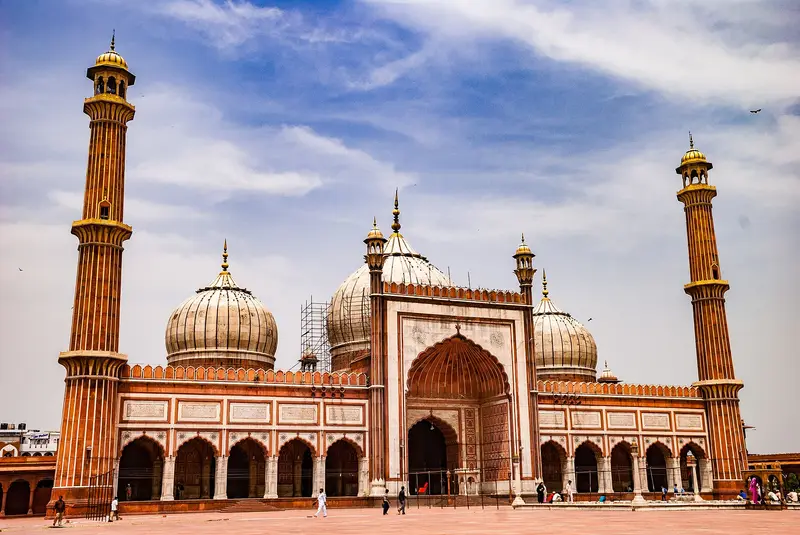
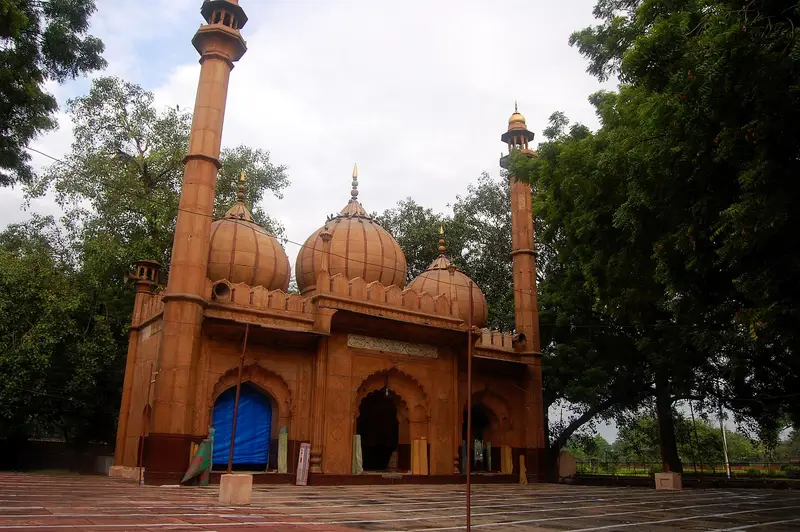
The mosque rests on a plinth of roughly 12 by 7 metres, set about 2.5 metres above the shop-lined streets around it. Three arched entrances lead into three rooms, with striped towers beside the central arch and two minarets at the rear corners. Three black-and-white marble domes rise behind a decorated parapet. Its use of red sandstone with white marble is considered unusual for its time, while its domes and minarets follow Delhi's larger mosques such as the Jama Masjid.
Unmapia
Coming soon
We’re still writing about Lal Masjid: its history, what’s there and why it’s worth the trip.
Where it is
28.67° N 77.23° E