
When to go
- Time of day
- Open 9:00 AM – 5:00 PM
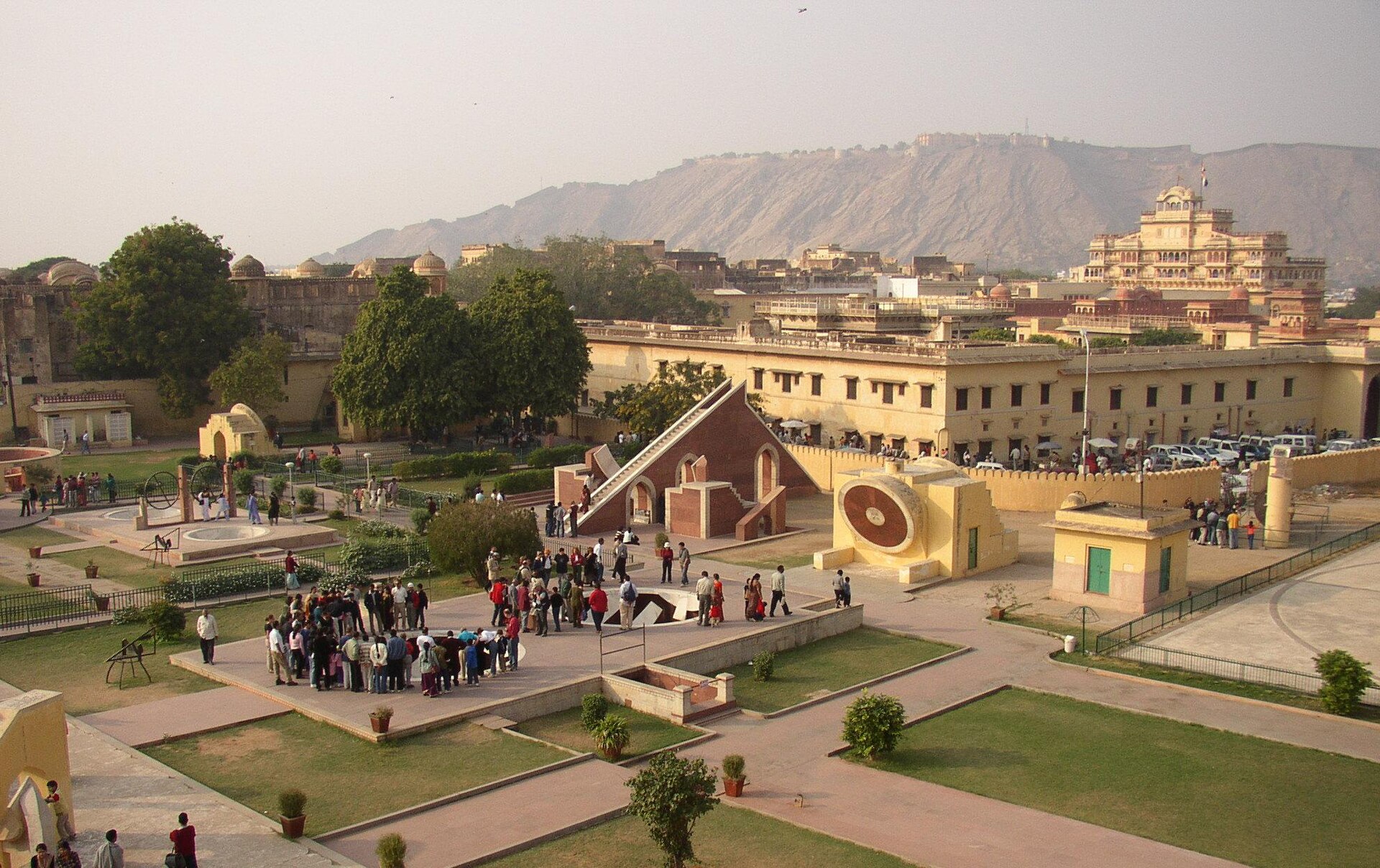
Photo: Knowledge Seeker · Public domain · Wikimedia Commons
Sign in to save places and plan trips, day by day.
Jantar Mantar in central Jaipur is an astronomical observatory built between 1728 and 1734 by Sawai Jai Singh II, a Rajput Maharaja with a deep interest in astronomy. He set up five observatories across India, and this is the biggest and most advanced of them. It is a UNESCO World Heritage Site and is protected under the Rajasthan Monuments, Archaeological Sites and Antiquities Act of 1961. Its design draws on several traditions: Sanskrit texts, the observatories at Maragheh and at Samarkand under Ulugh Beg, and European writing on instruments.
The instruments are built of local stone and marble in red, yellow and white. The Samrat Yantra is a huge sundial, 27 m high, that reads time to within about 2 seconds. The small Dhruva Yantra finds the position of the Pole Star, and other devices include the Jai Prakash Yantra and the Narivalya Yantra. Guided tours explain how each one works. Hawa Mahal, City Palace and Tripolia Gate are close by.
Unmapia
Coming soon
We’re still writing about Jantar Mantar, Jaipur: its history, what’s there and why it’s worth the trip.
Where it is
No map pin yet: directions search for the name