
 Historical Place
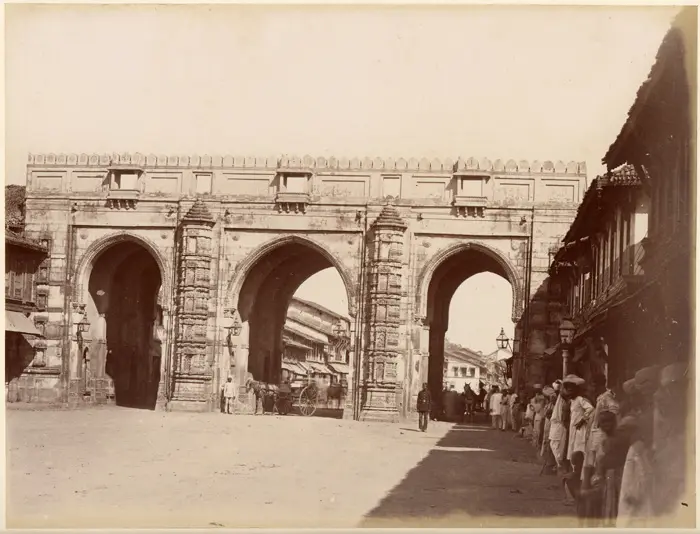
Teen Darwaza
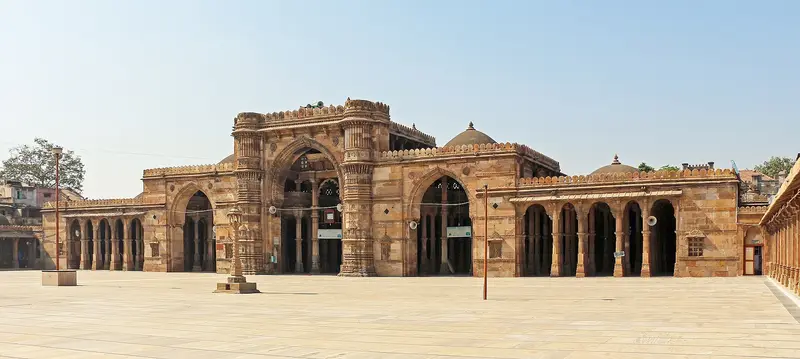
Triple-arched 1415 gateway of Ahmedabad that once led into the royal square, now a busy market area
Ahmedabad
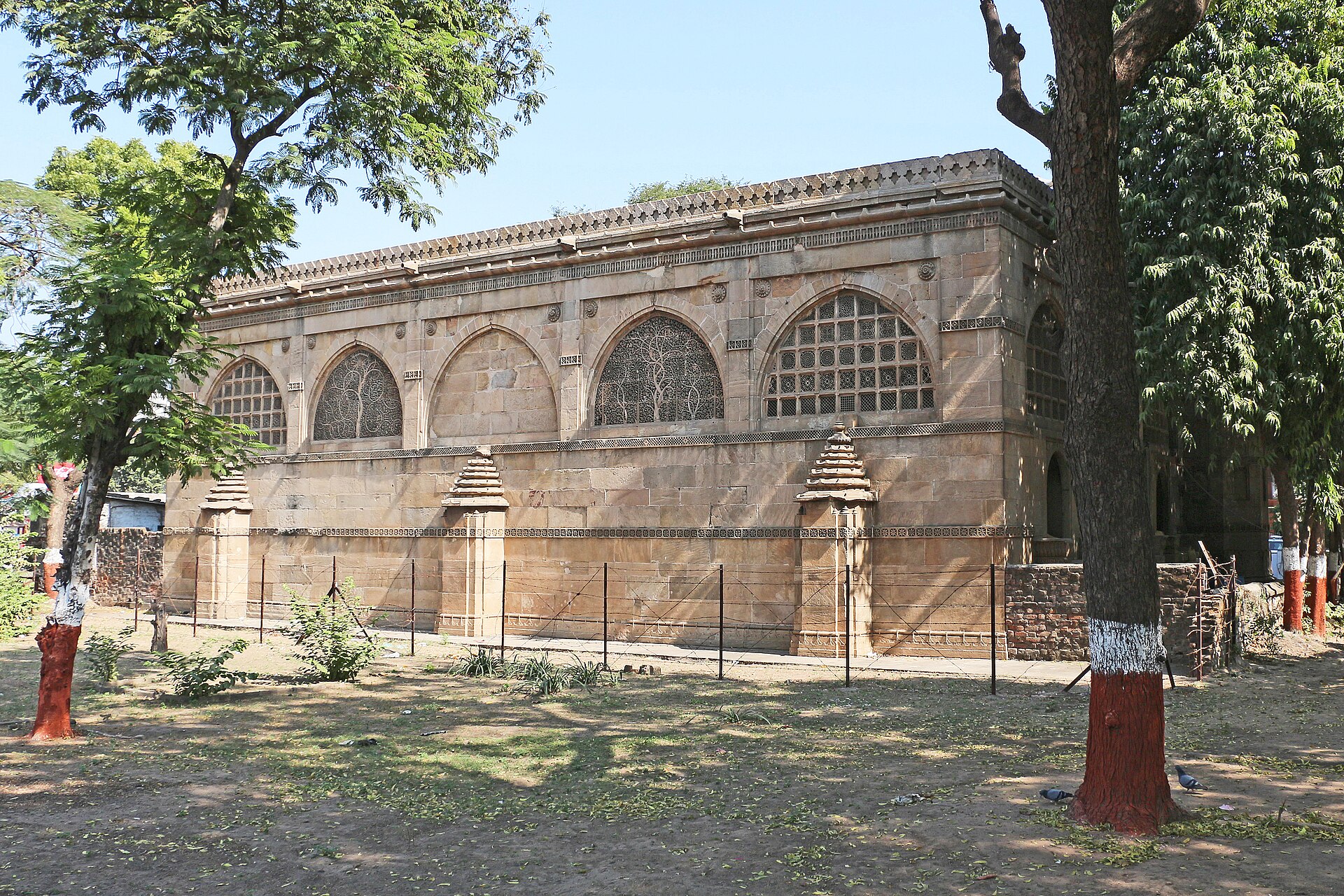
Photo: Bernard Gagnon · CC BY-SA 3.0 · Wikimedia Commons
Sign in to save places and plan trips, day by day.
Called Sidi Saiyyed ni Jali by locals, the Sidi Saiyyed Mosque was completed in 1572–73 in Ahmedabad, in the final year of the Gujarat Sultanate. A marble tablet names its builder as Shaikh Sa'id al-Habshi Sultani, a Habshi who began as a slave of the Turkish general Rumi Khan, rose to become a nobleman with a library and a public kitchen, and was buried beside the mosque in 1576. He rebuilt a smaller brick mosque that stood here before.
The building is known for ten carved stone lattice windows on its side and rear arches. Panels in the bays beside the central aisle show intertwining trees, foliage and a palm, and this design has become the unofficial symbol of Ahmedabad and inspired the IIM Ahmedabad logo. Under British rule it served as a government office until Lord Curzon ordered it vacated.
Unmapia
Coming soon
We’re still writing about Sidi Saiyyed Mosque: its history, what’s there and why it’s worth the trip.
Where it is
23.03° N 72.58° E