
 Historical Place
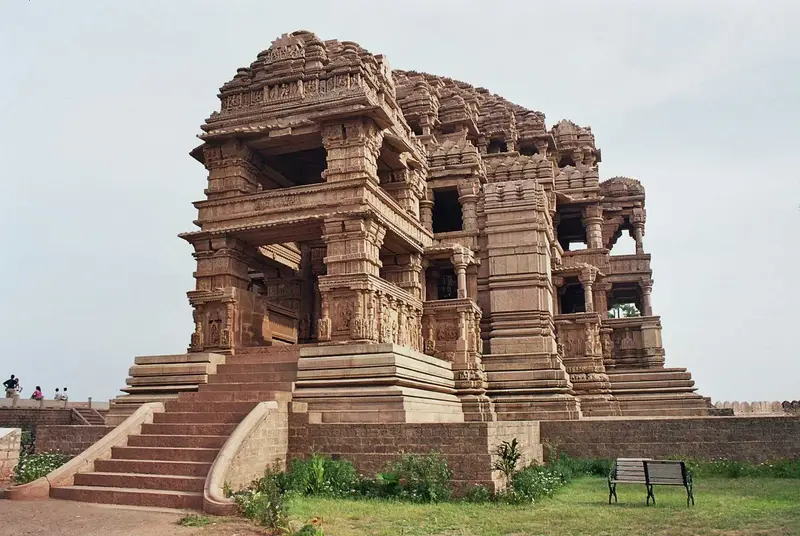
Sas-Bahu Temples, Gwalior
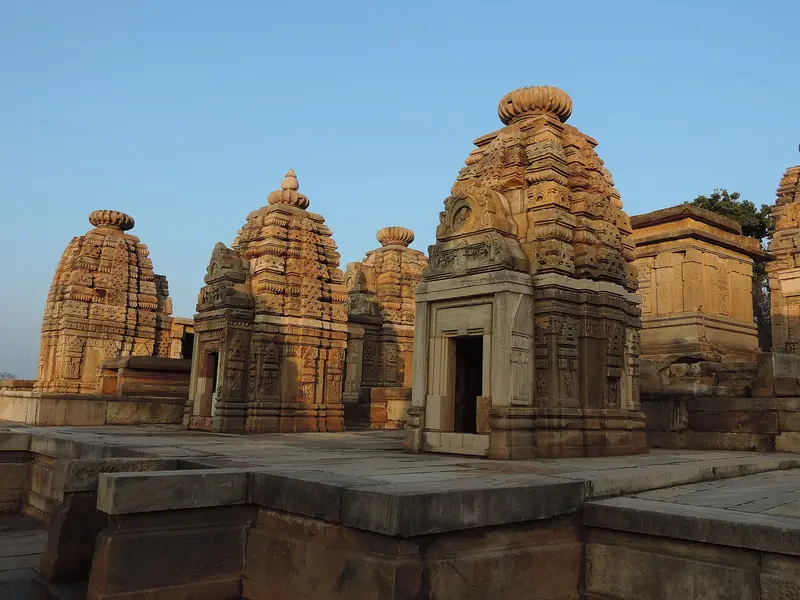
Richly carved 11th-century twin temples inside Gwalior Fort, built by the Kachchhapaghata king Mahipala
Gwalior
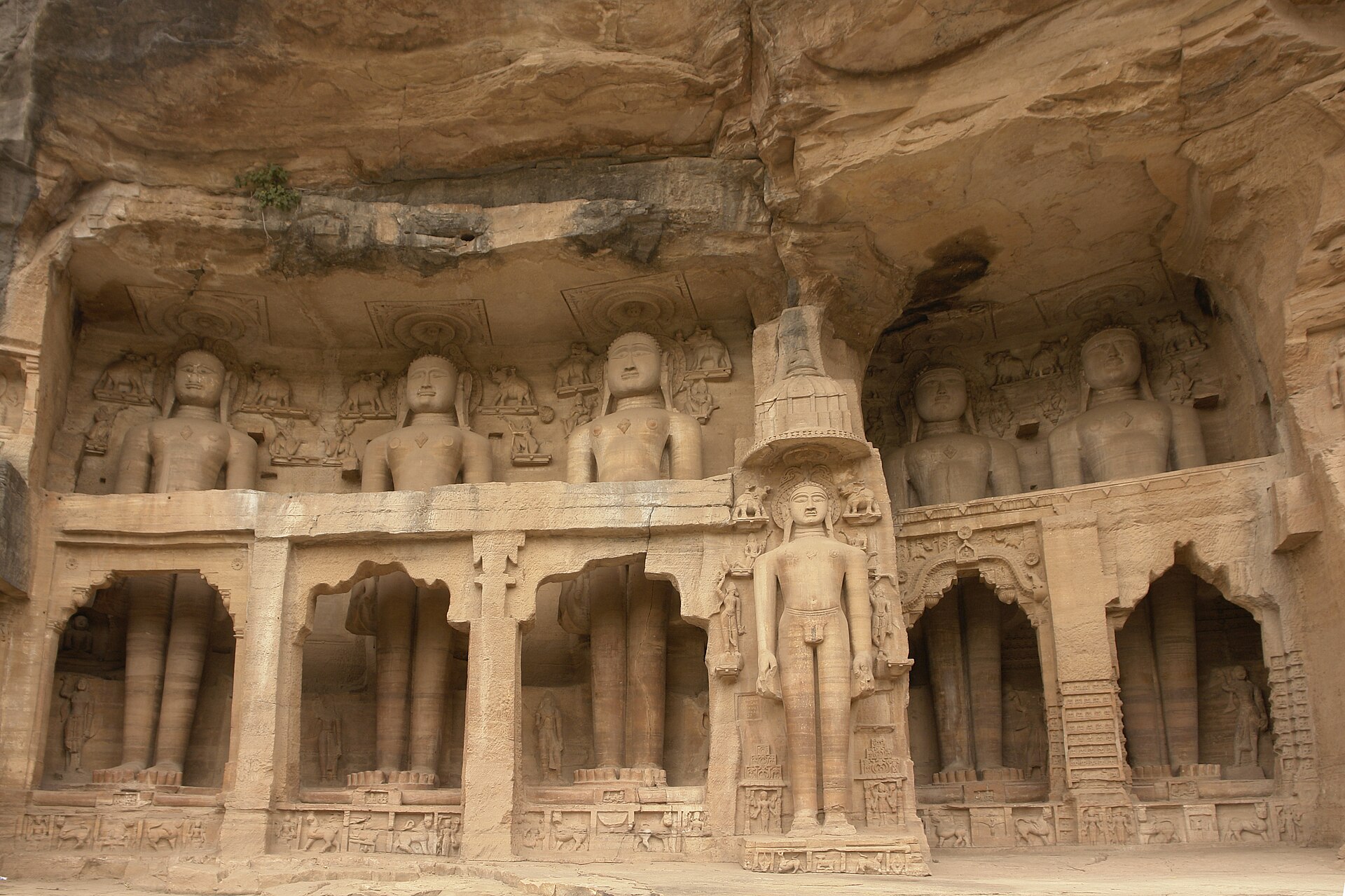
Photo: Yann (talk) · CC BY-SA 4.0 · Wikimedia Commons
Sign in to save places and plan trips, day by day.
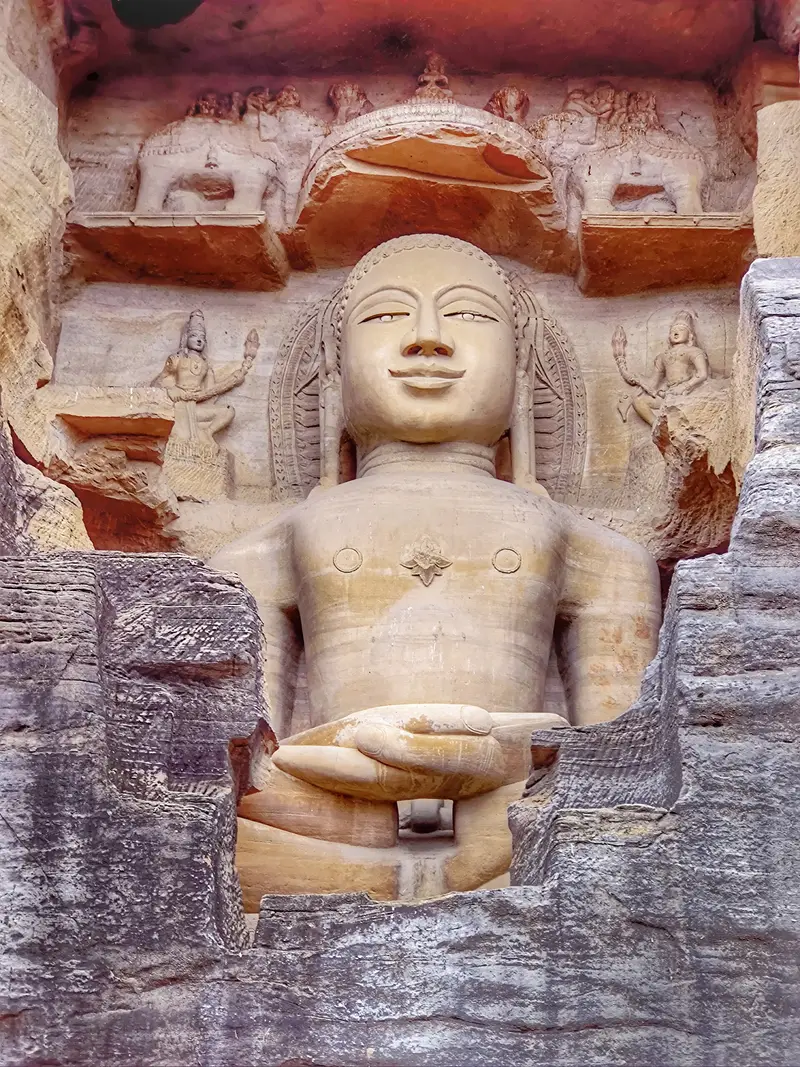
The Siddhachal Caves are Jain rock-cut shrines and colossal statues carved into the cliff inside the Urvahi Gate of Gwalior Fort, along both sides of the Urwahi road just below the fort's north-western walls. They are the most visited of five groups of Jain rock carvings on the fort hill, among nearly a hundred Jain monuments of the 14th and 15th centuries around the fort. Most date from the 15th century under the Tomar kings and were complete by about 1473.
The figures show all 24 Tirthankaras, seated in padmasana or standing in kayotsarga, naked in the Jain manner, and reliefs behind some of them tell Jain legends. Around 1527 the Mughal emperor Babur ordered the idols destroyed, describing in his memoir a large statue of about 40 feet; they were mutilated rather than wholly destroyed, their faces and limbs cut away. Centuries later the Jain community and the Scindias restored many, adding stucco heads to damaged statues. The site lies about a kilometre north-west of the Teli Temple.
Unmapia
Coming soon
We’re still writing about Siddhachal Caves: its history, what’s there and why it’s worth the trip.
Where it is
26.22° N 78.17° E