
 Historical Place
Siddhachal Caves
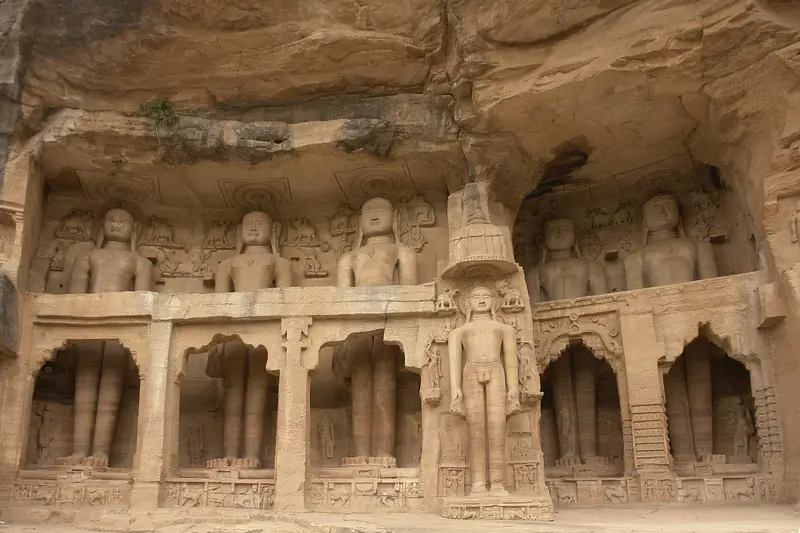
Colossal 15th-century Jain Tirthankara figures cut into the cliff by the Urvahi Gate of Gwalior Fort
Gwalior
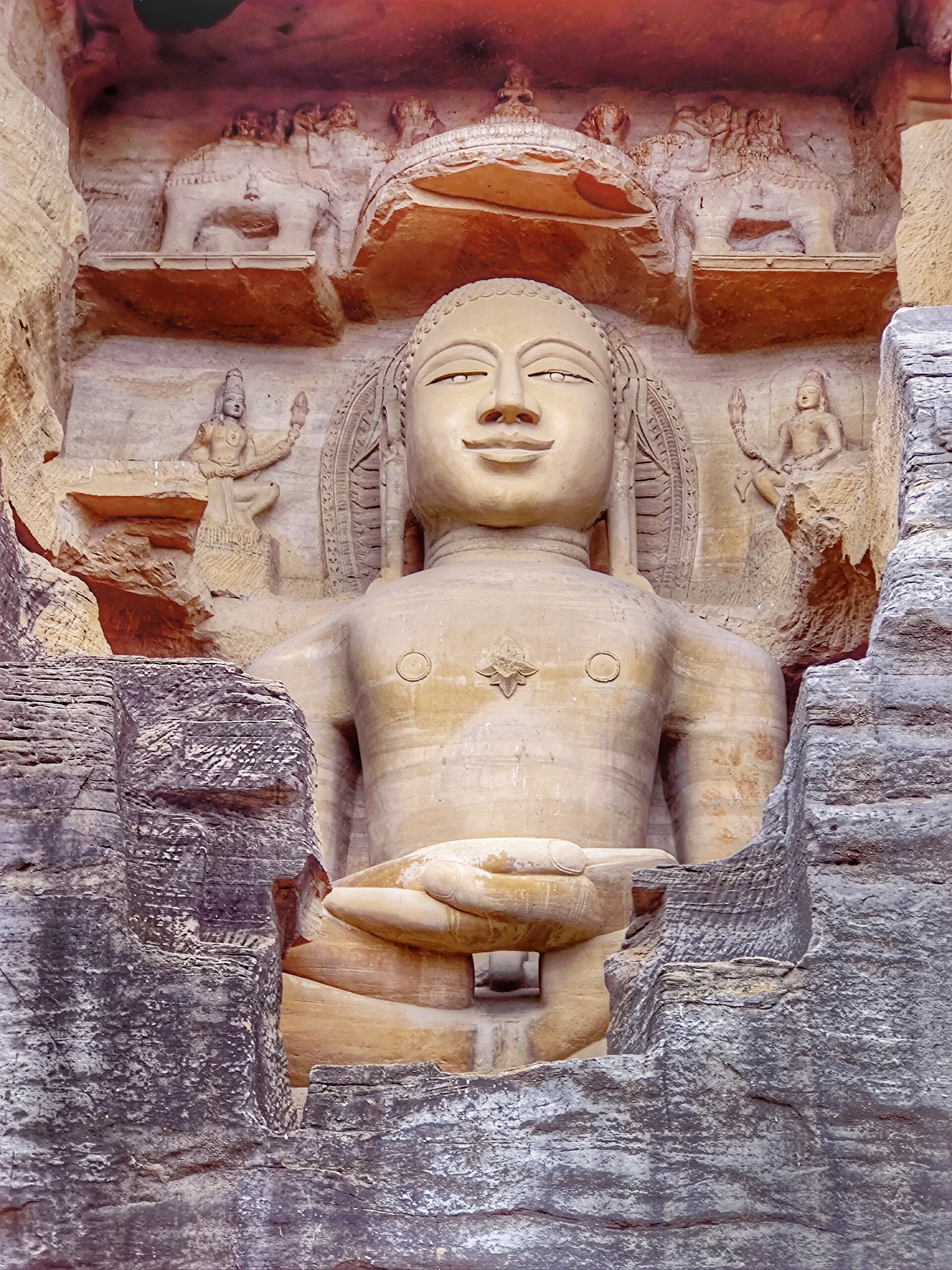
Photo: Pratyk321 · CC BY-SA 4.0 · Wikimedia Commons
Sign in to save places and plan trips, day by day.
The Gopachal rock-cut monuments are giant figures of Jain tirthankaras carved into the cliffs of the hill crowned by Gwalior Fort; Gop Parvat is an old name for the fort's hill. Most date from the 14th and 15th centuries, under the Tomar kings, and show the tirthankaras naked, either seated in padmasana or standing in kayotsarga.
Five groups ring the hill. The Urvahi group, on both sides of the road just below the fort gate, is the most visited because it can be seen from the road and carries inscriptions of 1440–1453. The south-east group, Gopachal Siddha Kshetra, has 26 caves in a row stretching about half a mile, while the south-west group, Trishalagiri, holds the oldest Jain carvings in Gwalior, of the 6th to 8th centuries. The hard-to-reach north-west group keeps an image of Naminath that escaped damage under Babur.
Unmapia
Coming soon
We’re still writing about Gopachal Rock-cut Jain Monuments: its history, what’s there and why it’s worth the trip.
Where it is
26.21° N 78.17° E