
 Spiritual Place
Pampa Sarovar
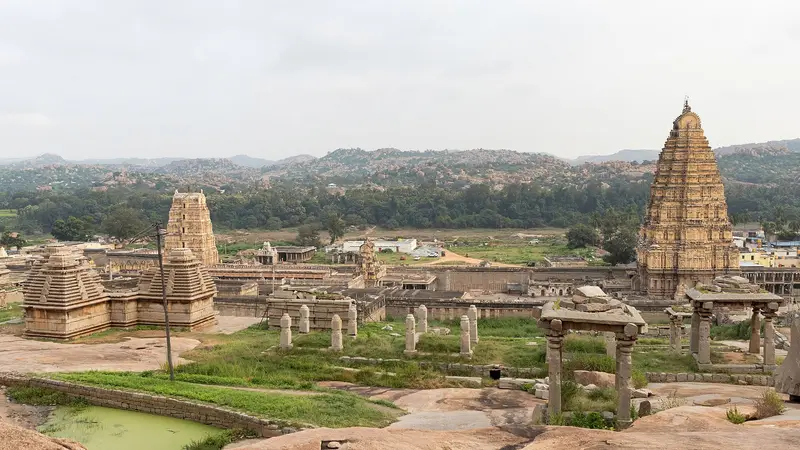
Sacred lake near Hampi linked to Parvati's penance and to Rama's meeting with Shabari
Koppal
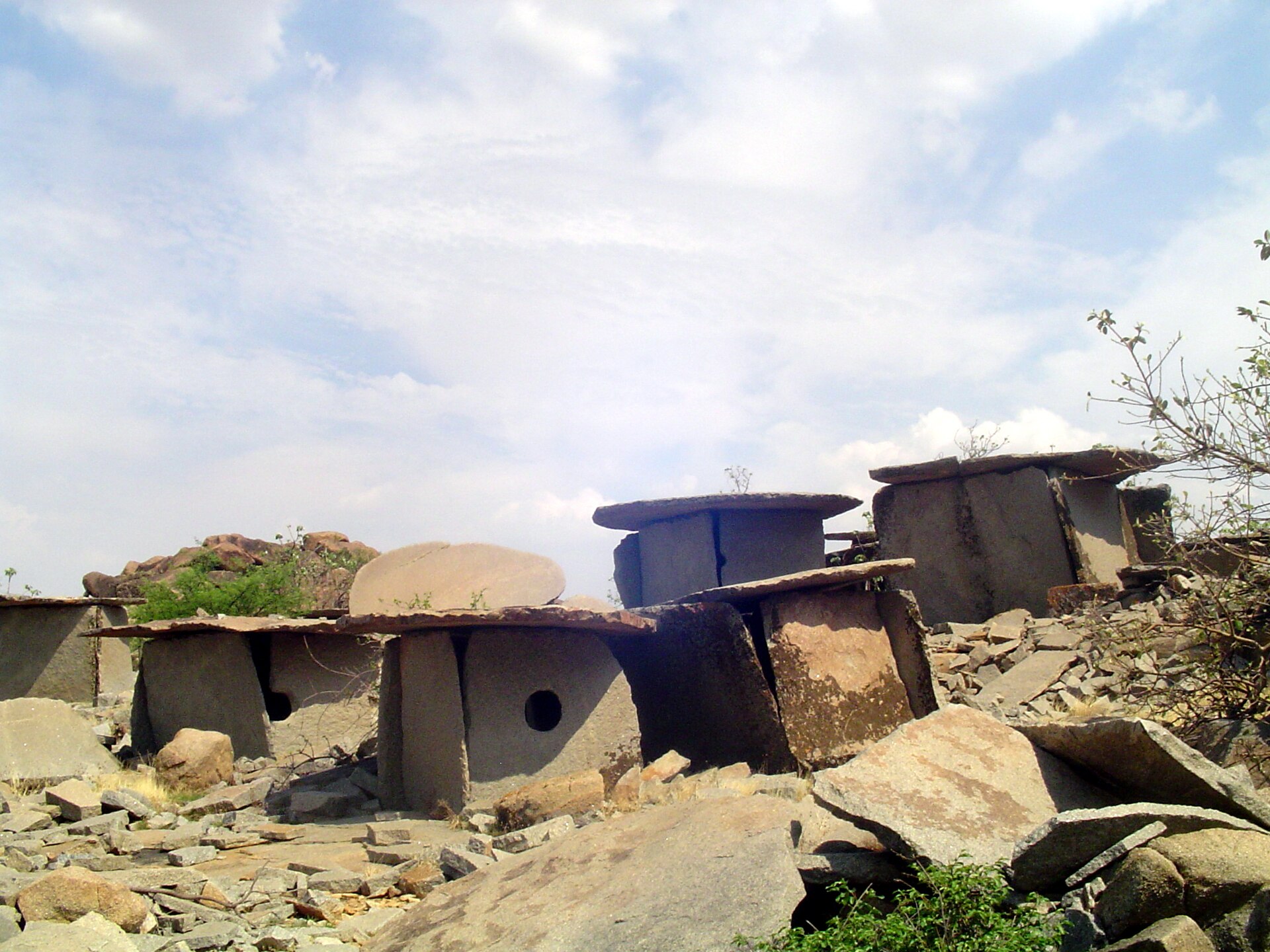
Photo: Sudeep m · CC BY-SA 3.0 · Wikimedia Commons
Sign in to save places and plan trips, day by day.
Hirebenakal is a megalithic site in Koppal district, about 10 kilometres west of Gangavathi and 35 kilometres from Hospet. Its roughly 400 funerary monuments date from between 800 BCE and 200 BCE, the transition from the Neolithic to the Iron Age, and it is reported to be the biggest burial ground of the roughly 2,000 megalithic sites in South India. Locally the hills are called the seven hills, or Moryar Gudda. Philip Meadows Taylor first described the site in 1835, Mortimer Wheeler excavated it in 1944–48, and it has been under the Archaeological Survey of India since 1955.
A fairly easy, well-marked path climbs through thorny scrub and loose boulders. Most monuments are dolmens, three-sided stone chambers roofed by a capstone, from half a metre to 3 metres high; some have round portholes that make them look like houses with windows, though they are tombs. They flank what was once a main street, alongside cists, pit circles and gable-roofed chambers, and many have now collapsed.
Unmapia
Coming soon
We’re still writing about Hirebenakal: its history, what’s there and why it’s worth the trip.
Where it is
15.44° N 76.46° E