
 Spiritual Place
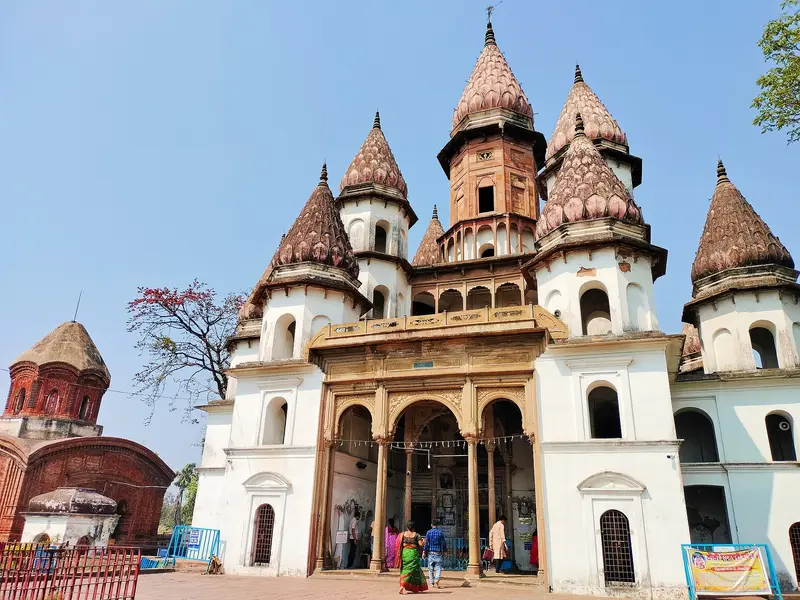
Hanseswari Temple
Thirteen-spired Kali temple at Bansberia, its five storeys modelled on the Tantric body
Hooghly
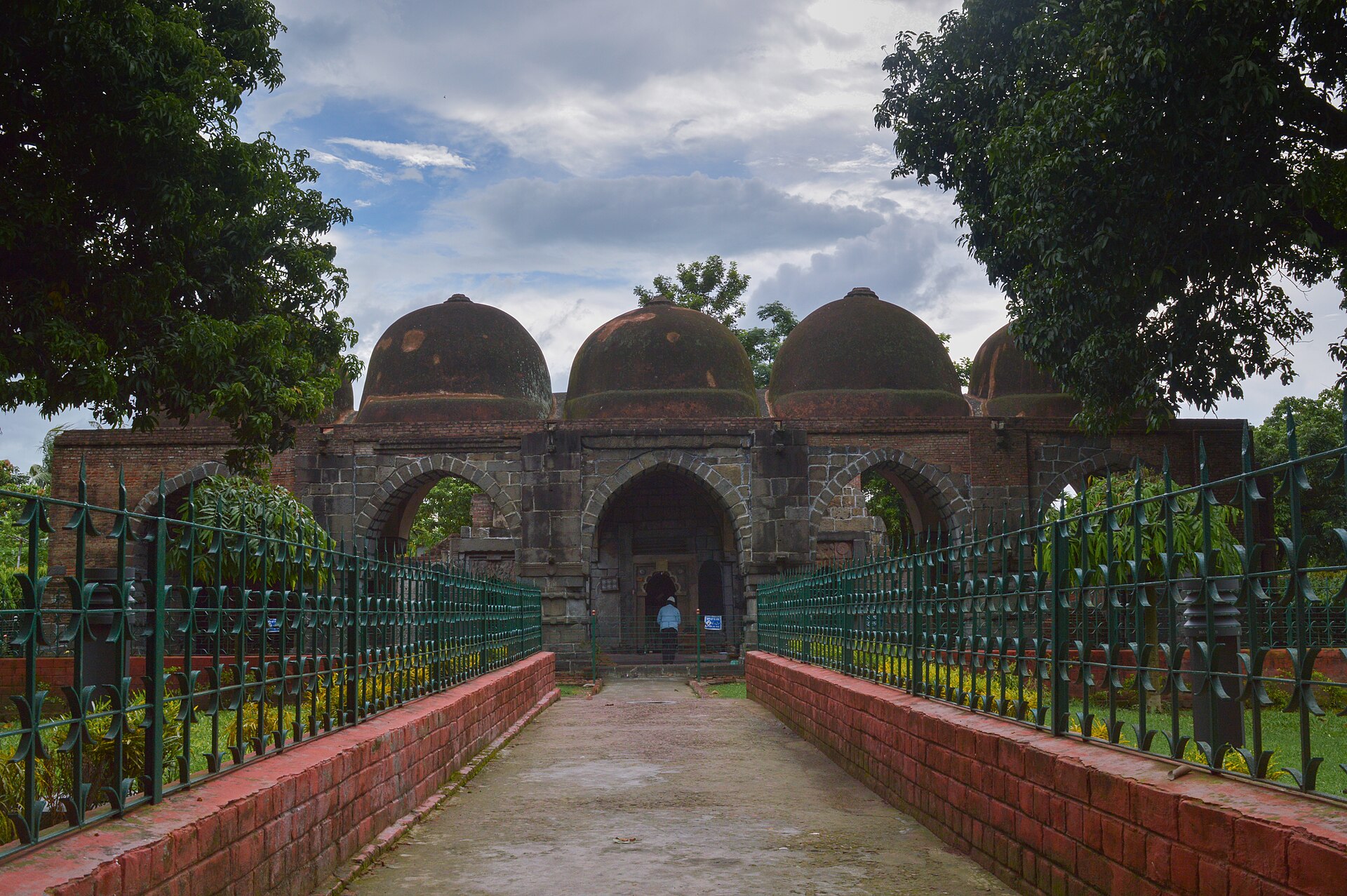
Photo: Paramanu Sarkar · CC BY-SA 4.0 · Wikimedia Commons
Sign in to save places and plan trips, day by day.
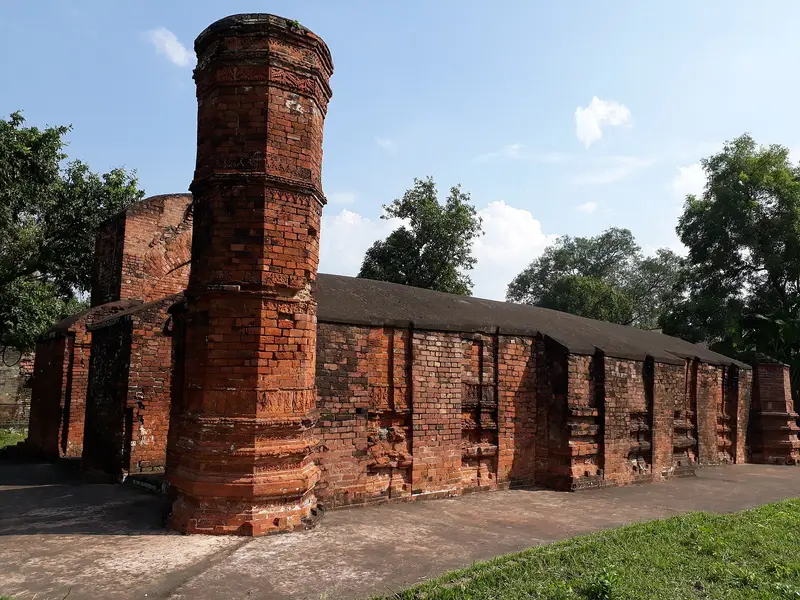
The mosque and dargah of Zafar Khan Ghazi at Tribeni are among the earliest surviving Muslim monuments in Bengal. Built by Zafar Khan Ghazi, a general from Delhi, the mosque is dated to 1298 from an Arabic inscription over the central mihrab, though that inscription calls the building a madrasa, so its first use may have been as a school. The rectangular hall, about 23.4 by 10.5 m, is the oldest surviving example in Bengal of the brick-and-stone method brought by Muslim rulers, and has been rebuilt several times.
In the eastern yard are two roofless square chambers, dated to 1315 and regarded as the earliest standing mausoleum in eastern India. The western one holds the graves of Zafar Khan and his wife, the eastern one four graves on a platform. Like the mosque, both reuse stone from Hindu temples, and carvings of Hindu deities and of scenes from the Ramayana and Mahabharata can still be seen on the blocks.
Unmapia
Coming soon
We’re still writing about Zafar Khan Ghazi Mosque and Dargah, Tribeni: its history, what’s there and why it’s worth the trip.
Where it is
22.98° N 88.40° E