
On the ground
- Access
- Nearest airport: Chaudhary Charan Singh International Airport (LKO), Lucknow.; Nearest railway station: Lucknow Charbagh Railway Station (LKO).
Sign in to save places and plan trips, day by day.
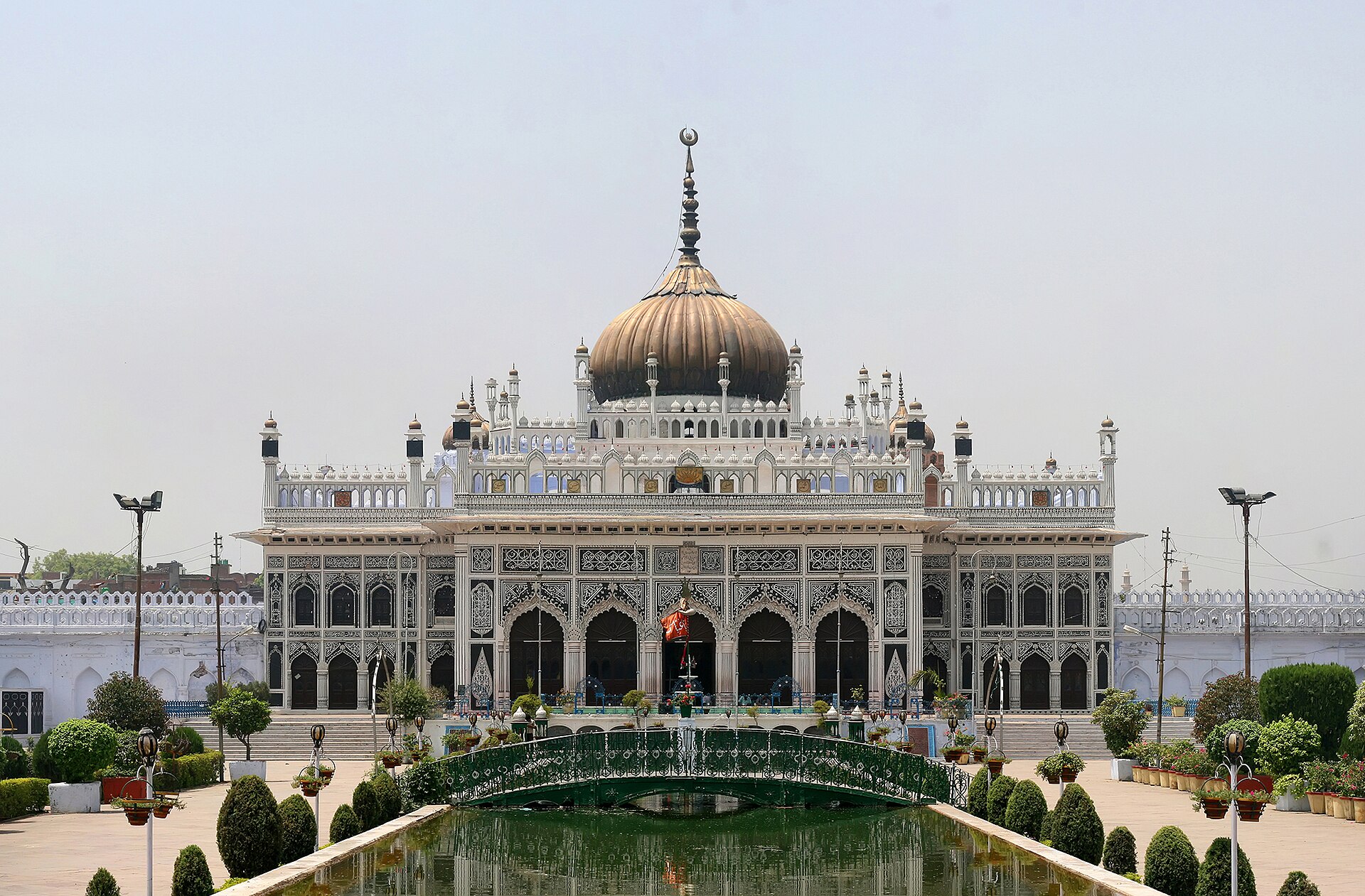
Rumi Darwaza is the great ceremonial gateway of old Lucknow, raised in the 1780s by Nawab Asaf-ud-Daula of Awadh. It was built as a famine relief work, giving people who had lost their livelihood paid labour rather than charity. The name means Turkish Gate, and the design, by the Persian architect Kifayatullah, took its cue from the Bab-i-Humayun or Sublime Porte in Istanbul, mixing Turkish and Persian ideas with Mughal and Awadhi forms.
The gate rises about 60 feet and is topped by an eight-sided chhatri. In place of the red sandstone the Mughals often used, the builders worked in brick finished with lime plaster, which allowed very fine moulded detail; floral patterns, niches, jharokha balconies and latticework cover the front. Slim turrets stand beside the central arch, four minarets mark the corners, and wings extend on both sides so that it reads almost as a building. Old accounts describe a lantern that once hung from the top and water jets that played from the arch.
Unmapia
Coming soon
We’re still writing about Rumi Darwaza: its history, what’s there and why it’s worth the trip.
Where it is
No map pin yet: directions search for the name