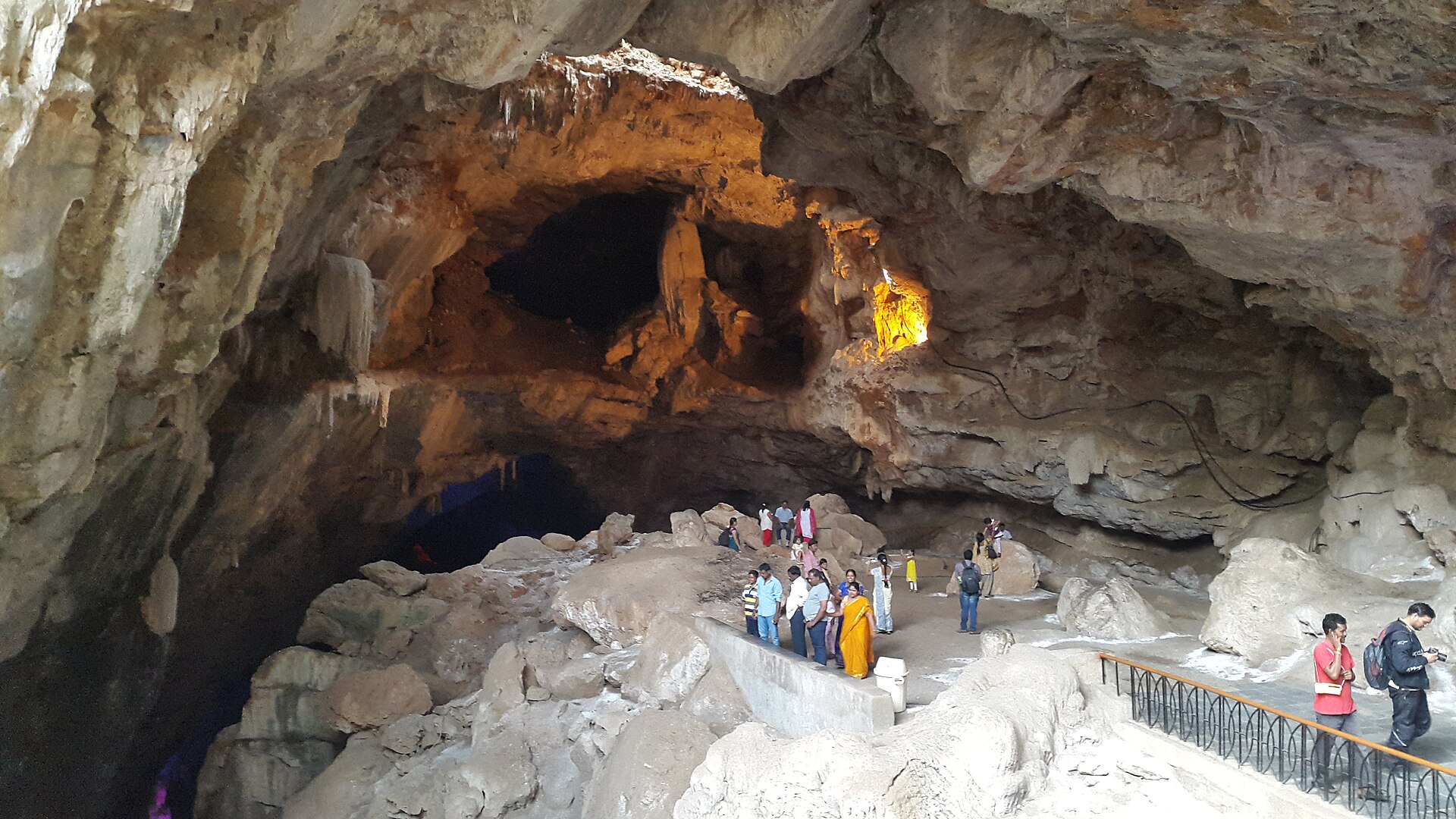
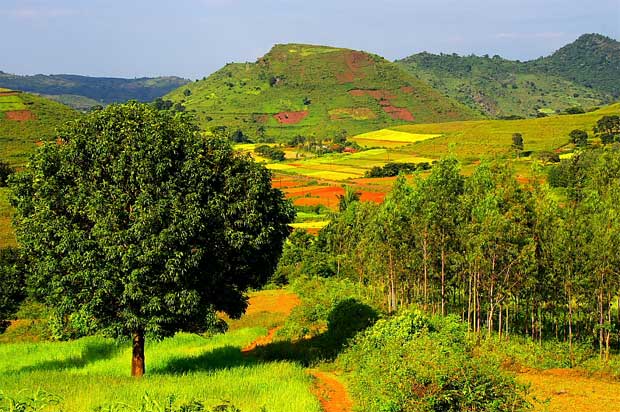
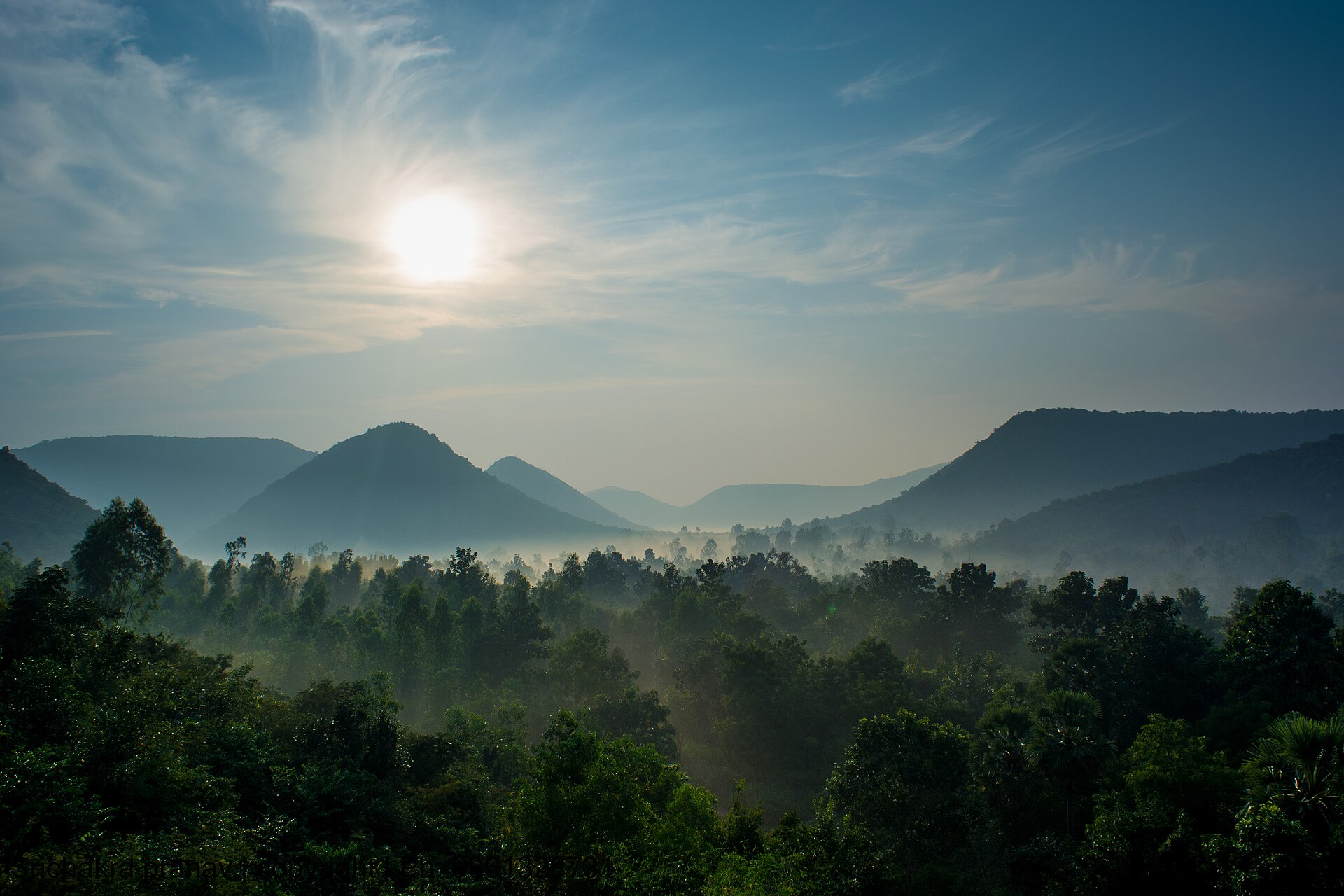
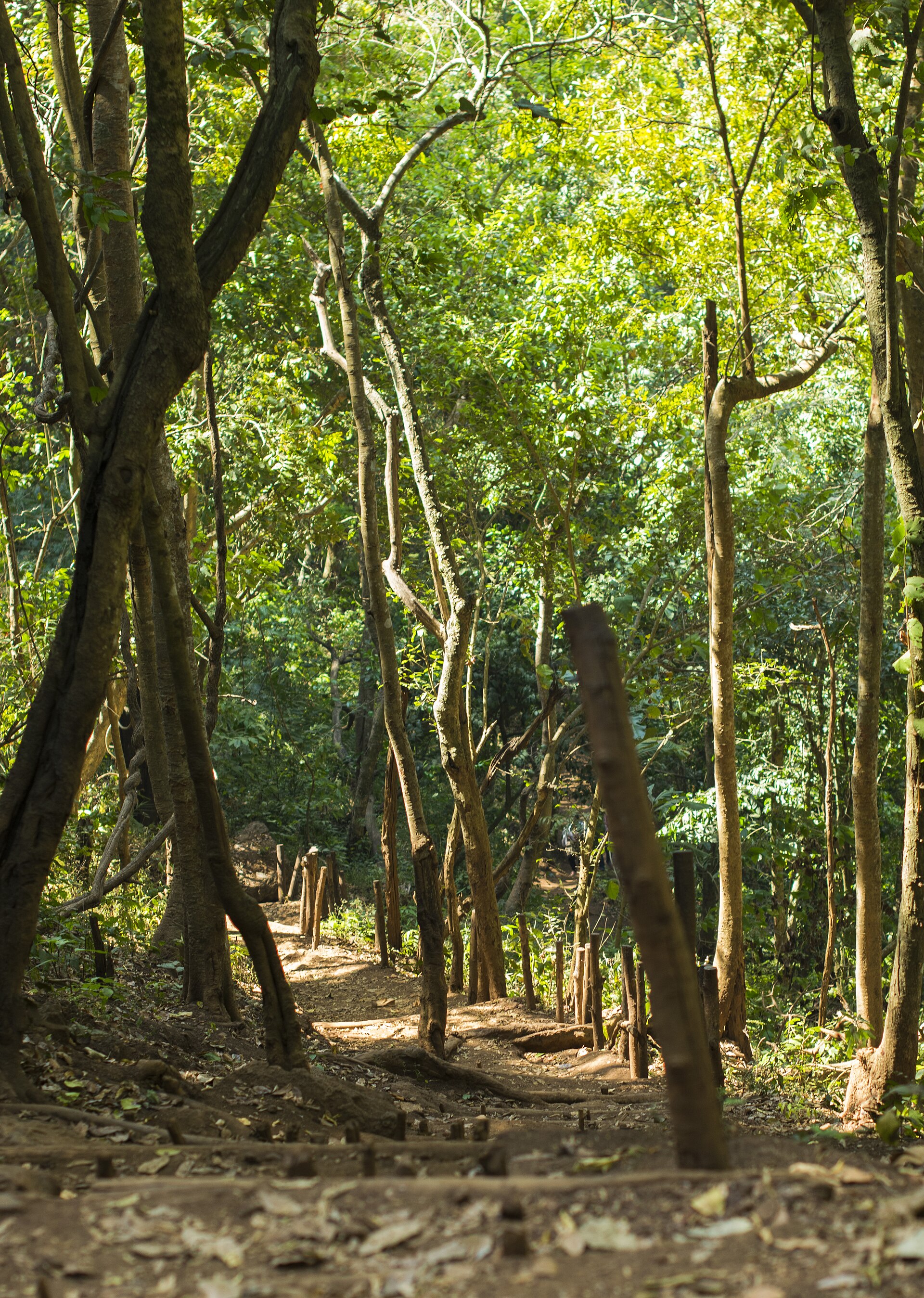
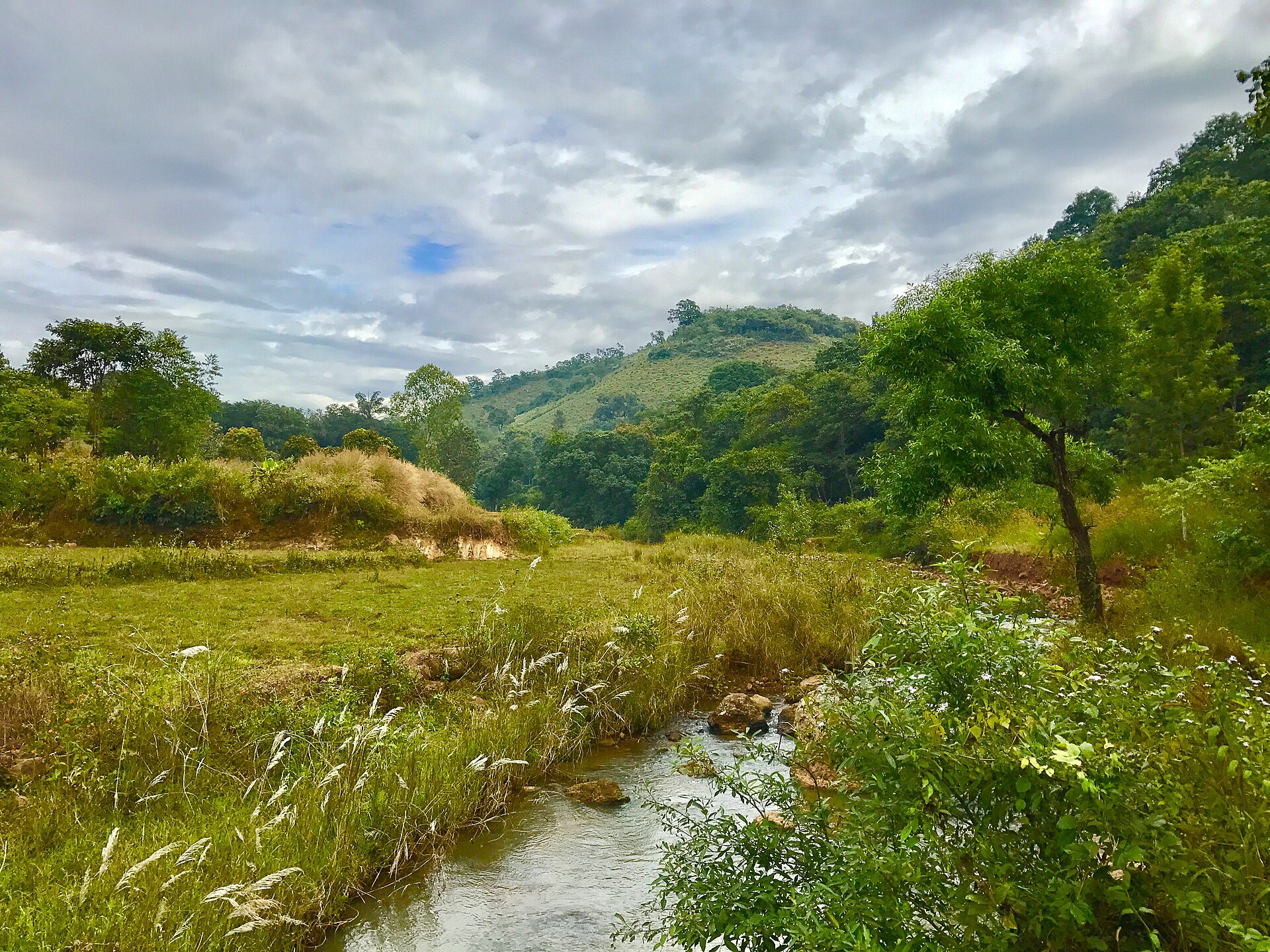
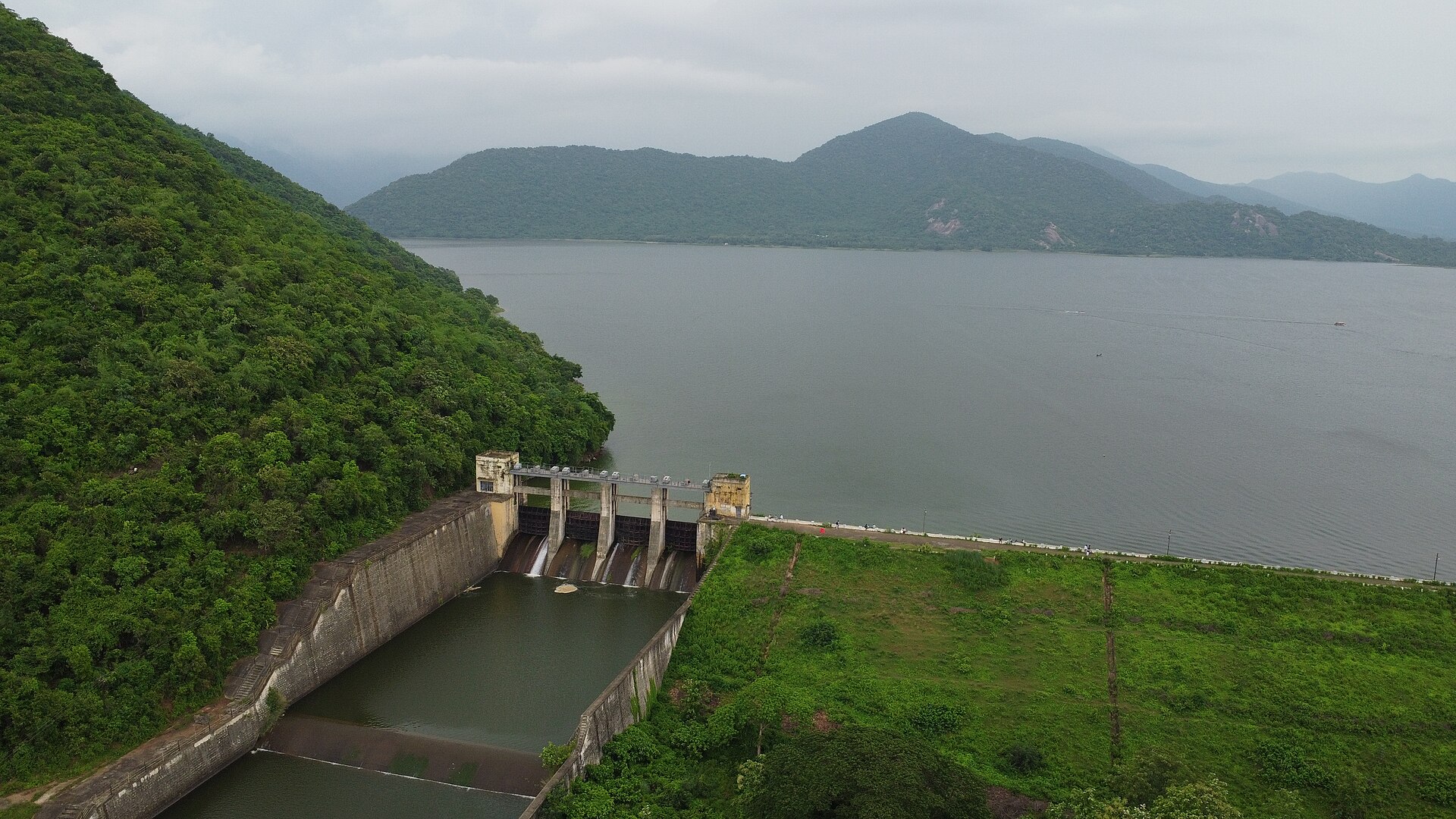
Borra Caves are limestone caves in the Ananthagiri hills of Araku Valley, about 88 km from Visakhapatnam, at an elevation of roughly 705 m. Spread over about two sq km and reaching some 80 m in depth, they are counted among the largest caves in India. The Telugu name, Borra Guhalu, combines words for 'belly' and 'caves'.
Water seeping through the rock has built stalactites and stalagmites that people liken to Shiva and Parvati, a mother and child, a crocodile or a sage's beard, and these formations are still changing. A local story credits the find to a cowherd searching for a cow that fell through the roof, who found a lingam-like stone inside; a small Shiva shrine now stands outside. William King George of the Geological Survey of India recorded the caves in 1807, and stone tools 30,000 to 50,000 years old have been found here. At one point the Kottavalasa-Kirandul railway passes over the caves, with 100 feet of rock between.