
 Nature & Wildlife
Shanti Sagara
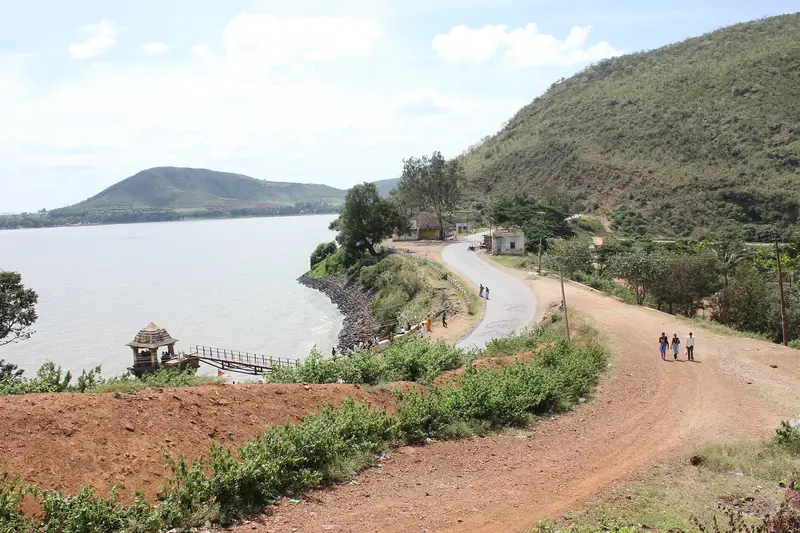
Centuries-old tank near Channagiri, called Asia's second-largest built lake, with a 30 km shoreline
Davanagere
Sign in to save places and plan trips, day by day.
Hallur is an archaeological mound about 6.4 m high on the banks of the Tungabhadra in Haveri district, Karnataka, in semi-arid scrub country. The archaeologist Nagaraja Rao found it in 1962 and excavated it in 1965. It ranks among the earliest Iron Age sites in South India.
The digs showed a Neolithic-Chalcolithic settlement from about 2000 to 1200 BCE, followed by a shift into the Iron Age between 1200 and 1000 BCE. Radiocarbon tests by the Tata Institute of Fundamental Research put the iron objects at around 1000 BCE, well before the 250 BCE date that D. H. Gordon had proposed for iron in India. The later layers held black-and-red pottery painted with white lines, K. R. Alur found horse bones here in 1971, and plant remains show that early farmers here grew millets, mung bean, black gram and horse gram.
Unmapia
Coming soon
We’re still writing about Hallur: its history, what’s there and why it’s worth the trip.
Where it is
14.33° N 75.62° E